
EV charger installation done properly, with the permit on record.
Level 2 charger installs for residential homes across Eastern Ontario. Licensed, ESA-permitted, clean routing, and an honest load calculation before the quote.
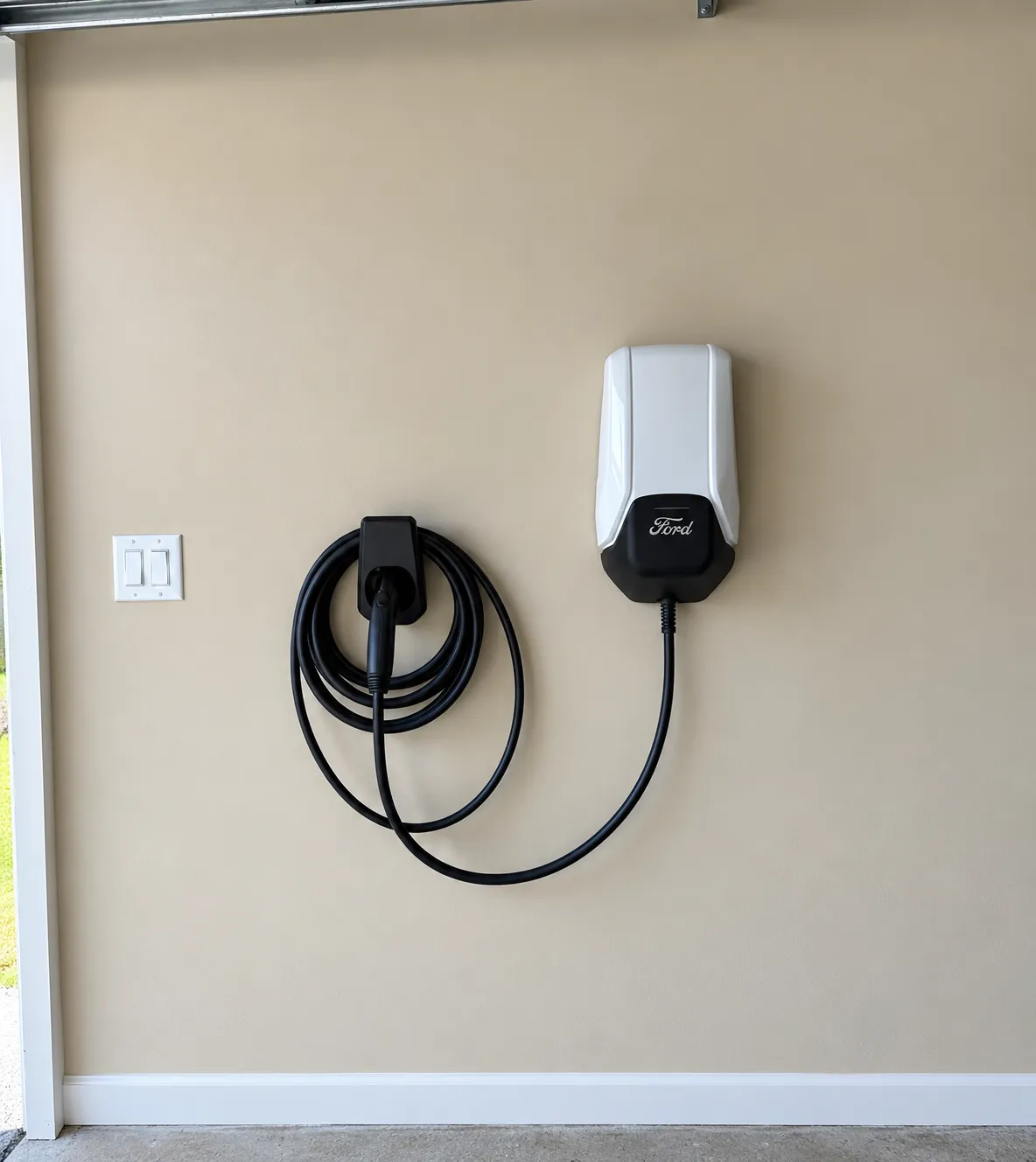
- ESA permit & inspectionPulled, scheduled, and filed under our licence number
- Load calculationFull service review before any work starts
- Dedicated breakerSized correctly for your charger model
- Clean conduit or in-wall routingNo surface-run wire across finished walls
- Hardwired or NEMA 14-50 outletWhichever suits your charger and setup
- Certificate of AcceptanceDelivered when the install passes inspection
Common EV charger scenarios we handle
Most residential EV installs fall into one of three situations. Here's what each looks like.
Attached garage, 200A panel
The easiest case. Short run from panel to wall-mounted charger, dedicated 50A or 60A breaker, hardwired or 14-50 receptacle. Clean one-day install with ESA inspection to follow.
Detached garage or outdoor
Requires an underground or overhead feed, proper weatherproofing, and often a sub-panel. More involved but very common in Eastern Ontario. We handle trenching coordination with your landscaper or do the excavation ourselves.
Older home / tight panel
If your panel is 100A or already loaded, we run the math to see whether a load management device, service upgrade, or charger downsizing is the right call. No upselling — we recommend the cheapest option that actually works.
EV charger installation FAQ
For most homes in Eastern Ontario, a Level 2 EV charger install runs $1,499–$2,500 installed, depending on panel capacity, the distance from panel to charger, and whether a panel upgrade is needed. A simple install in an attached garage 5m from the panel is at the lower end. A detached garage install with a trench, sub-panel, or panel upgrade lands higher. All our EV installs include the ESA permit, inspection coordination, dedicated breaker, and clean conduit routing — no surprise line items.
Yes. Any hardwired 240V circuit in Ontario requires an ESA permit and inspection. Installing without a permit can void your home insurance and creates issues when you sell. As an ECRA/ESA-registered contractor, we pull the permit on every job and hand you the Certificate of Acceptance when it passes inspection — usually within a week of completion.
Most 200A panels support a 40A or 48A EV charger without issue. 100A panels are tighter — we run a full load calculation to check whether your current service can handle the added load. If it can't, options include load management devices (cheaper), a panel upgrade, or a dedicated EV-only meter. We'll tell you honestly which route makes sense before quoting the work.
Hardwired is cleaner, supports higher amperages (up to 48A continuous), and is required for many commercial charger models. A 14-50 plug-in setup is fine for most Tesla/J1772 chargers up to 40A and gives you flexibility to move the charger. Both are code-compliant when installed correctly. We'll walk through the trade-offs based on your vehicle and how long you plan to stay in the home.
For a straightforward install (attached garage, 200A panel, under 10m run), we're in and out in 3–5 hours. A detached garage with trenching, a panel upgrade, or a retrofit through finished walls can be a one- or two-day job. The ESA inspection is scheduled separately and typically happens within a few business days of completion.
What our customers are saying
Real reviews from real customers on Google.
“I had an excellent experience with Cornerstone Electrical installing the charger for my Ford Mustang Mach-E. The installation was done professionally, everything was neat and well organized, and the entire process was smooth from start to finish. The electrician was incredibly friendly, knowledgeable, and took the time to answer all of my questions. It’s clear they take pride in their work. I highly recommend Cornerstone Electrical to anyone looking for a reliable EV charger installation. Five stars all the way!”
“Great service and communication. I emailed them for a quote. I got a quick response back. I needed a EV charger installed and some breaker change in my panels. The job was quick and everything looks good and professional. I would definitely recommend them.”
“Excellent service / top-notch job completion. Was on time and completed the necessary work in a professional manner. Was very polite and great to work with. Would absolutely recommend.”
Get a quote for your EV charger install
Tell us your panel size, charger model, and where you want the charger mounted. We'll come back with a clear itemized quote within a business day.
Request a Quote